
The RedBook Insider: The Return of Badge Engineering: Can a Familiar Logo Sell Unfamiliar Tech?
Badge engineering has long been part of the Australian automotive landscape. From the Holden Apollo and Toyota Lexcen through to Daewoo-derived Holdens, manufacturers have historically used shared vehicle programs to quickly expand their model ranges. More recently, the practice has been largely confined to the light commercial vehicle segment, with examples such as the Volkswagen Amarok and Ford Ranger, Mazda BT-50 and Isuzu D-Max, and the latest Nissan Navara and Mitsubishi Triton.
Historically, however, badge-engineered vehicles have rarely escaped the shadow of their donor model. While many have delivered respectable sales outcomes, they have often struggled to achieve the same market acceptance or resale strength as the vehicle on which they were based.
Today, the industry appears to be witnessing a new wave of badge engineering, but one that differs significantly from previous generations.
The latest examples are not simply rebadging exercises. Instead, they reflect a rapidly evolving global automotive industry where established manufacturers are partnering with Chinese vehicle makers to access advanced EV platforms, battery technology and software capabilities.
Mazda's 6e and CX-6e, developed in partnership with Changan, are among the clearest examples. Ford has confirmed the Bronco Basecamp for Australia from its partnership with JMC, while Nissan continues to expand its future product plans through its alliance with Dongfeng, including the widely anticipated Frontier Pro Ute.
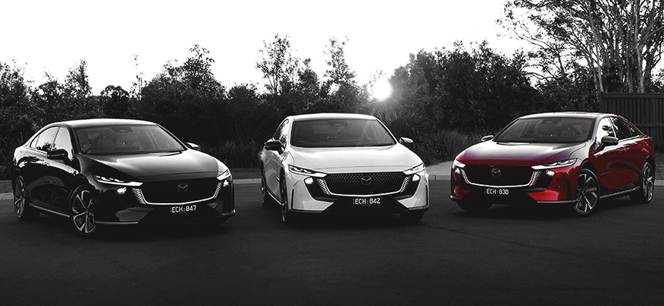
In many respects, the traditional badge-engineering formula has been reversed. Historically, Western and Japanese manufacturers supplied the engineering expertise and technology, with partner brands receiving a derivative product. Today, Chinese manufacturers are increasingly providing the underlying vehicle architecture, electrification systems and software, while the established OEM contributes brand equity, retail networks, aftersales support and customer trust.
That raises an intriguing question for both consumers and the automotive industry: can an established badge accelerate acceptance of an unfamiliar vehicle?
Australian buyers are becoming increasingly comfortable with Chinese-built vehicles, yet brand familiarity remains a powerful influence on purchasing decisions. For many consumers, a Mazda, Ford or Nissan badge may provide reassurance around ownership, servicing, warranty support and long-term value retention.
For the residual value market, the implications are particularly interesting. Will these vehicles perform like traditional Mazda, Ford and Nissan products? Or will buyers ultimately value them alongside technologically similar Chinese alternatives?
History suggests badge-engineered vehicles often struggle to establish a distinct identity. However, this latest generation may prove different. y pairing highly competitive Chinese EV technology with established badges, these partnerships bridge the gap between rapid, emerging innovation and legacy consumer trust. As Australia's vehicle fleet continues to electrify, that dynamic may become one of the most closely watched developments in the future of residual values.
Recent Posts
-
 The RedBook Insider: The Ownership Stress Test Is Yet to Come21st September 2026
 -
 The RedBook Insider: Australia's EV Moment Arrived Quietly. August Proved It.21st September 2026
 -
 The RedBook Insider: The Return of Badge Engineering: Can a Familiar Logo Sell Unfamiliar Tech?21st September 2026