
The RedBook Insider: The Ownership Stress Test Is Yet to Come
The Australian automotive market is experiencing one of the fastest shifts in brand composition in its history.
Today, Chinese brands account for around 26% of all new vehicle sales, yet they represent just 3.8% of used vehicle transactions. The reason is simple: the used market still largely reflects purchasing decisions made three to seven years ago, when Chinese manufacturers had a much smaller presence, meaning the real test for the industry hasn’t arrived yet.
As hundreds of thousands of vehicles move through their first ownership cycle and enter the used market, buyers won't simply be assessing price, technology or driving range. They'll be evaluating something potentially more important: long-term support.
Retained values are ultimately a measure of confidence, not just in the vehicle itself, but in the ecosystem around it. Buyers need to know that it can be serviced, repaired, insured and supported throughout its life.
RedBook analysis indicates the Chinese-brand vehicle parc could approach 1.28 million vehicles by 2027, with approximately 950,000 vehicles expected to be on Australian roads by 2026. At the same time, Chinese brands have become a dominant force in the EV market, accounting for 62.5% of EV sales year-to-date, up sharply from just 18% two years ago.
The question is no longer whether these vehicles will be sold. The question is whether the support ecosystem can scale at the same pace.
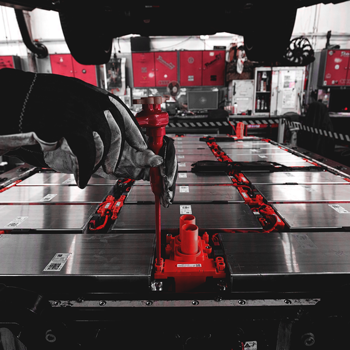
While Chinese brands collectively operate more than 550 sales and service locations nationally, vehicle volumes are growing even faster. RedBook analysis shows some emerging brands are now placing significantly higher vehicle loads on each support location than established manufacturers, raising questions about whether service, parts and repair infrastructure can scale at the same pace as the vehicle parc.
BYD provides an interesting illustration. The brand currently operates around 156 service centres, compared with Toyota's 321 locations. On a sales-per-site basis, that equates to approximately 121 monthly sales per BYD location versus around 60 per Toyota location, effectively placing almost twice the vehicle load on each support site.
Importantly, this is not simply a servicing discussion. Modern EVs typically require 30-40% less routine maintenance than traditional internal combustion vehicles. The challenge lies elsewhere, including high-voltage diagnostics, specialist technician availability, replacement parts, collision repair capability and crash parts supply. This is where the retained value conversation intersects with the broader insurance ecosystem.
Parts availability and repair turnaround times directly influence insurer costs, customer satisfaction and total cost of ownership. If repair pathways become constrained or replacement components become difficult to source, those pressures can flow through insurance premiums, accident repair cycles and, ultimately, buyer confidence in the used market.
Recent Posts
-
 The RedBook Insider: The Ownership Stress Test Is Yet to Come21st September 2026
 -
 The RedBook Insider: Australia's EV Moment Arrived Quietly. August Proved It.21st September 2026
 -
 The RedBook Insider: The Return of Badge Engineering: Can a Familiar Logo Sell Unfamiliar Tech?21st September 2026